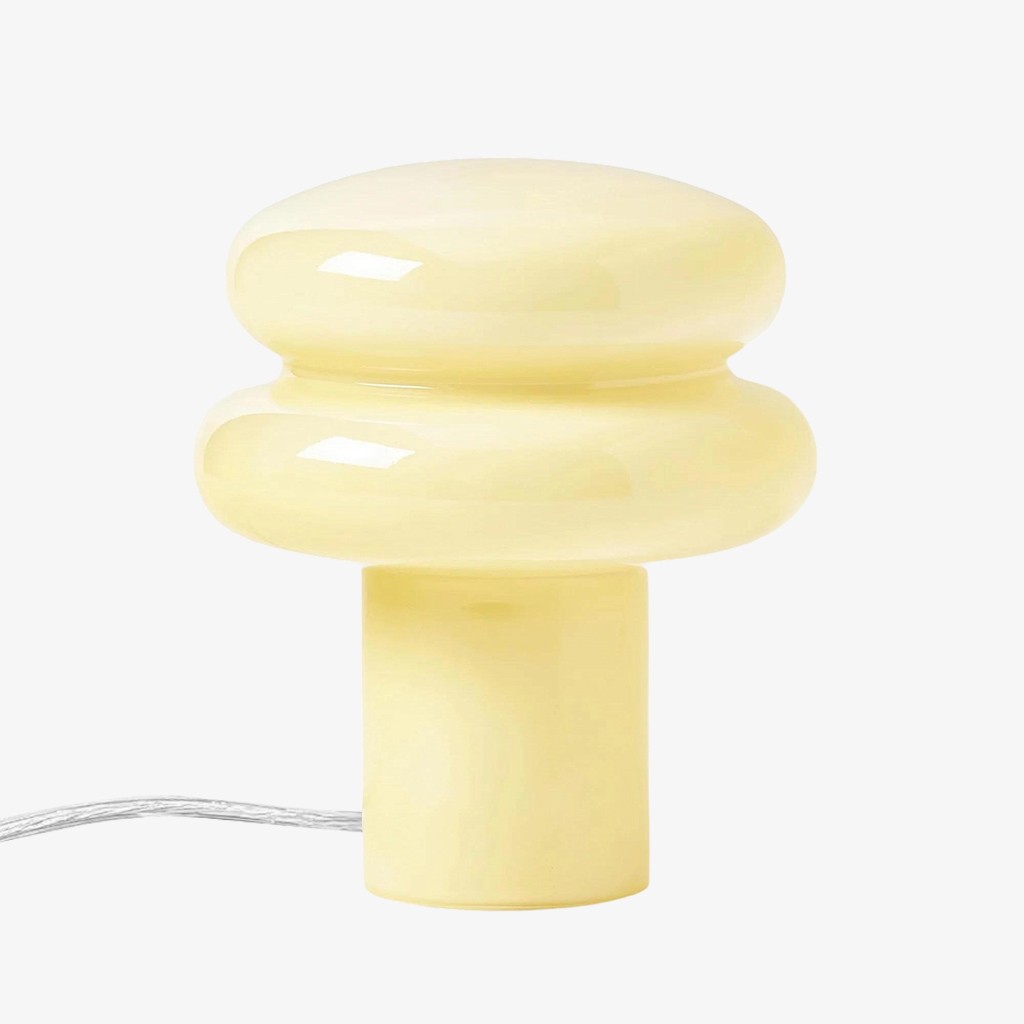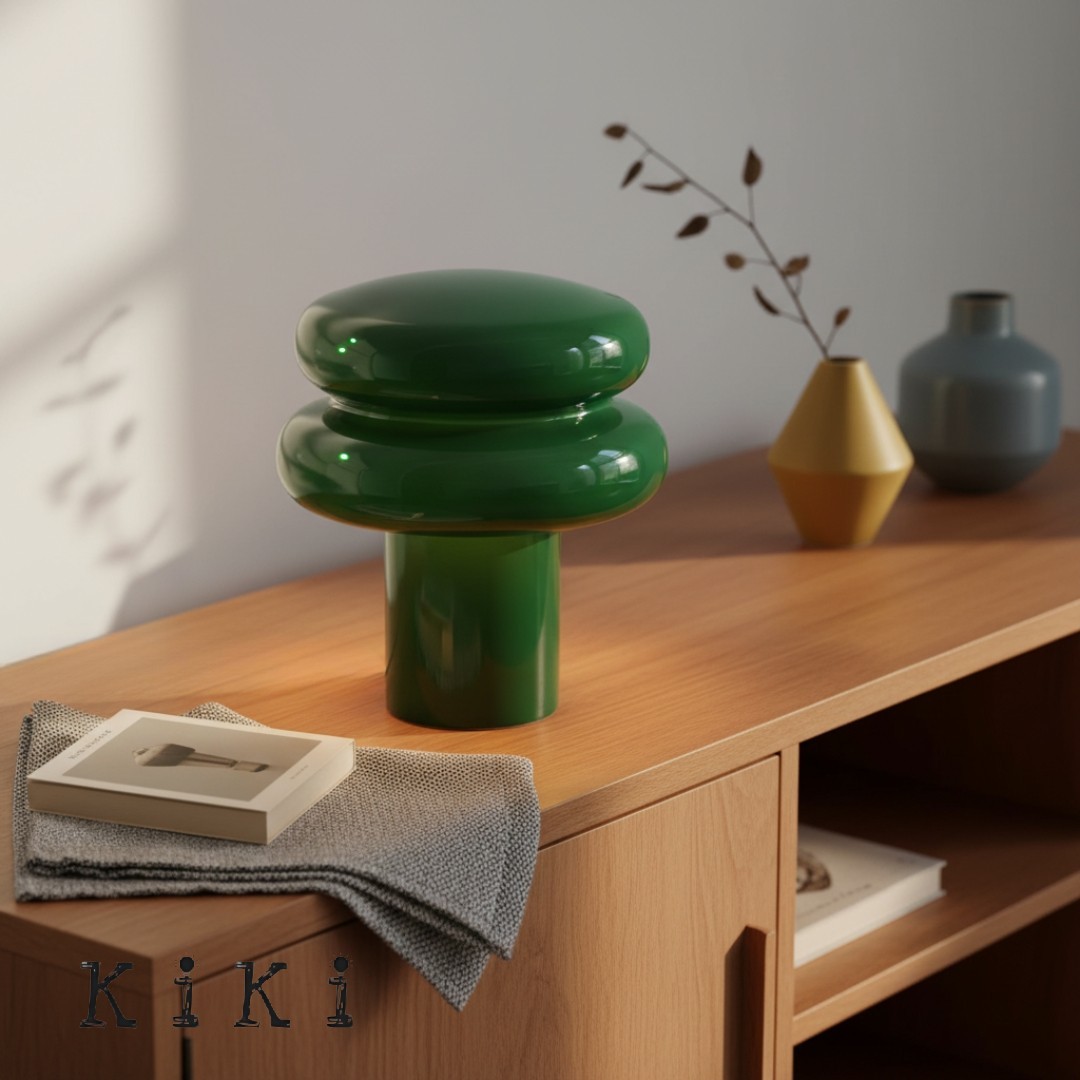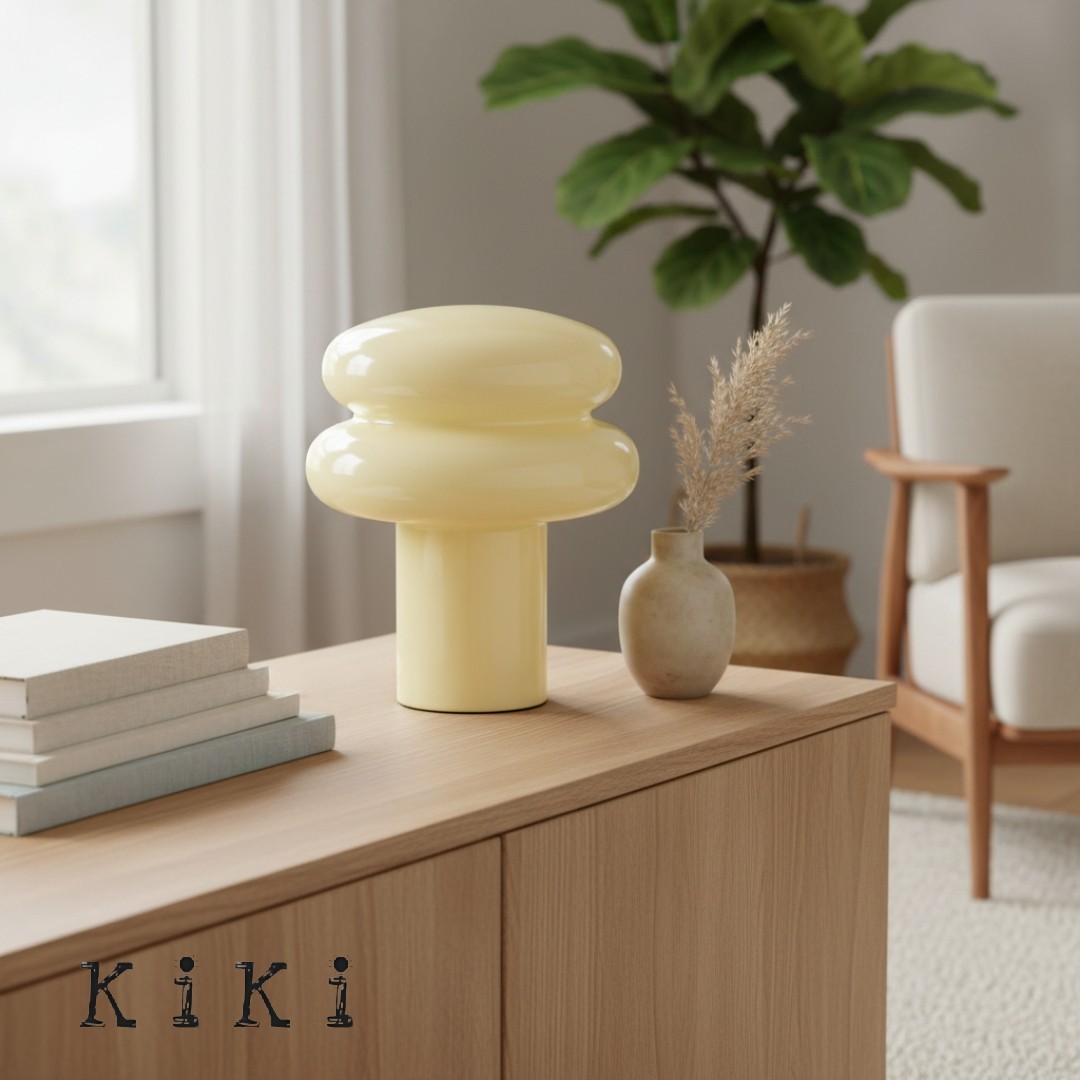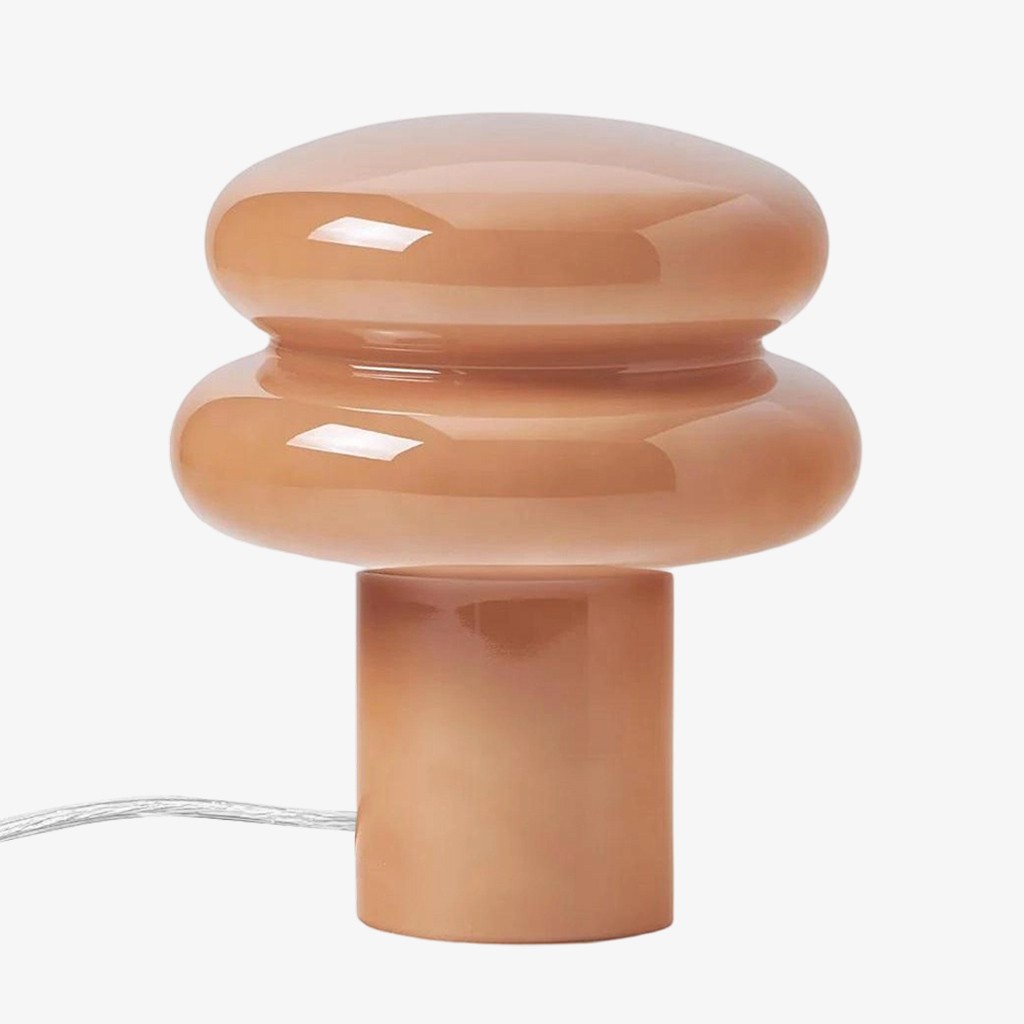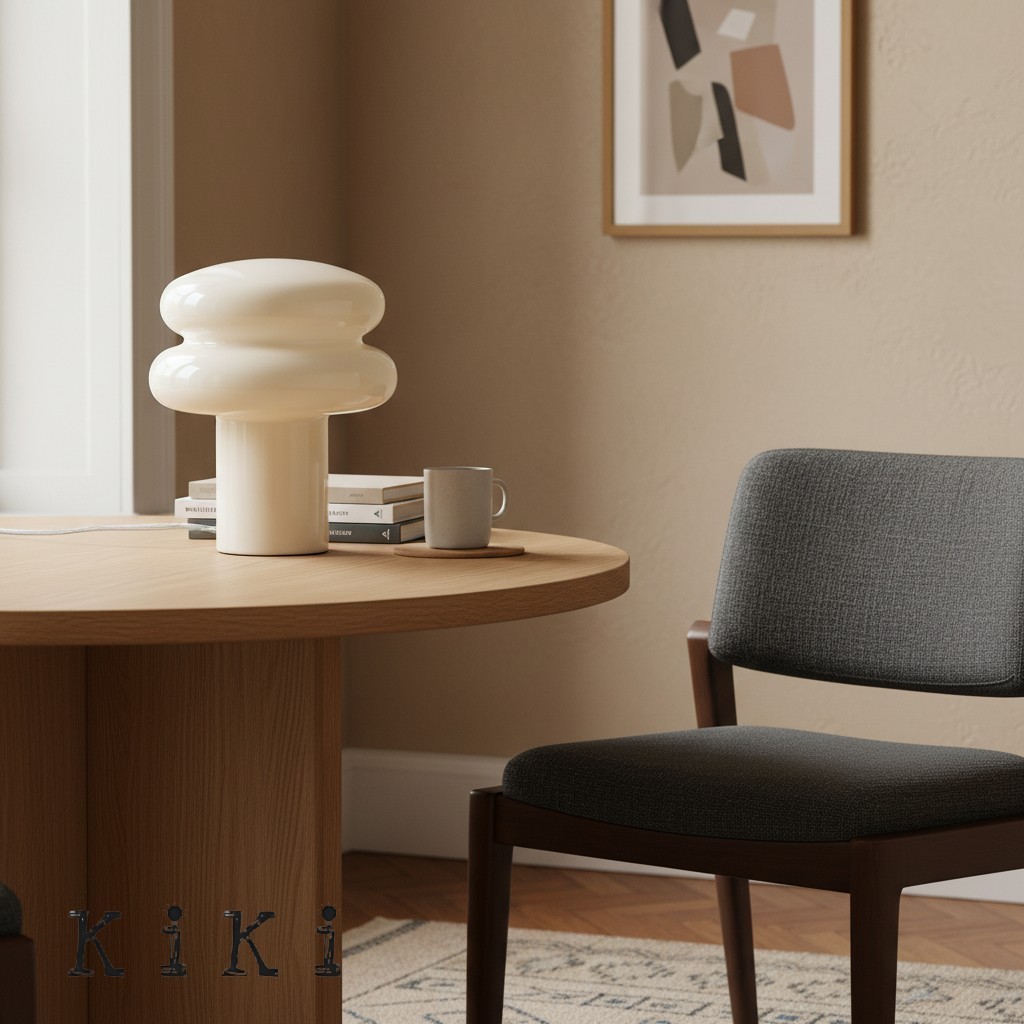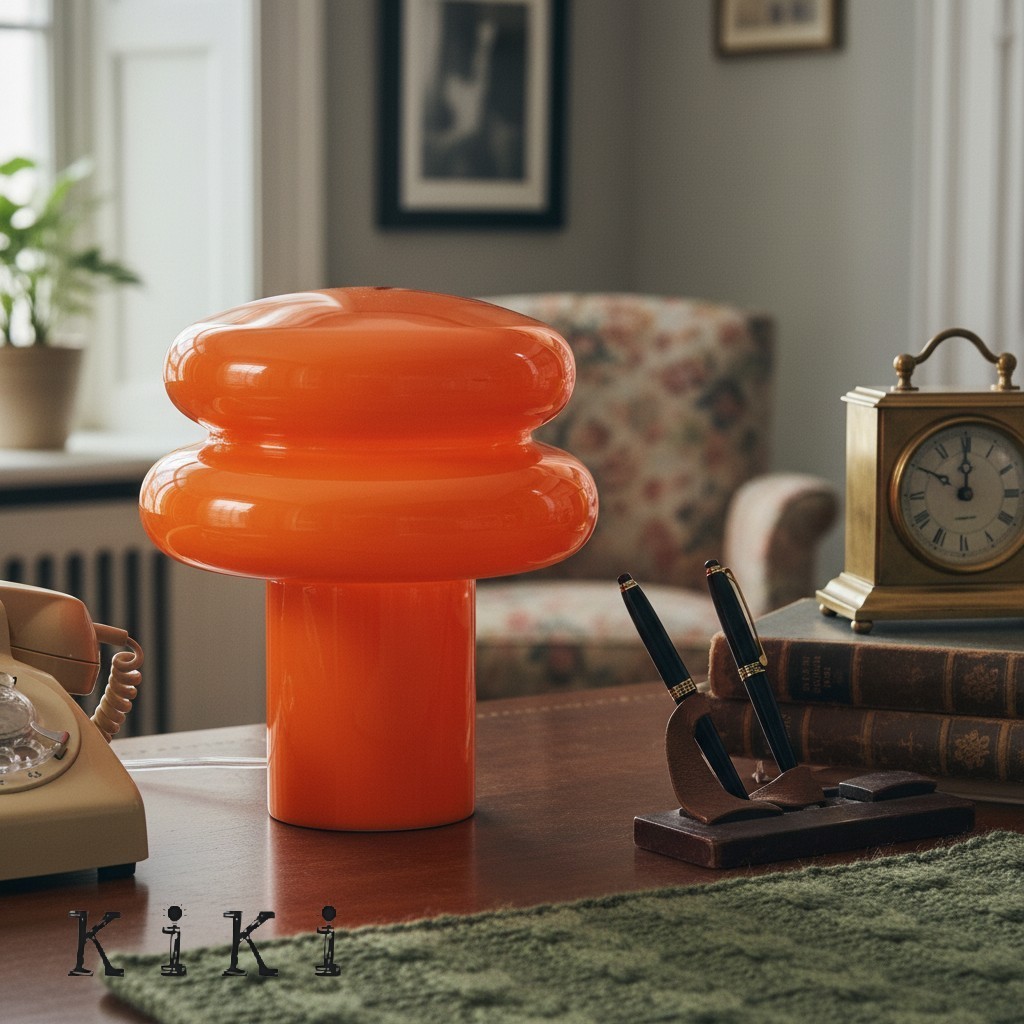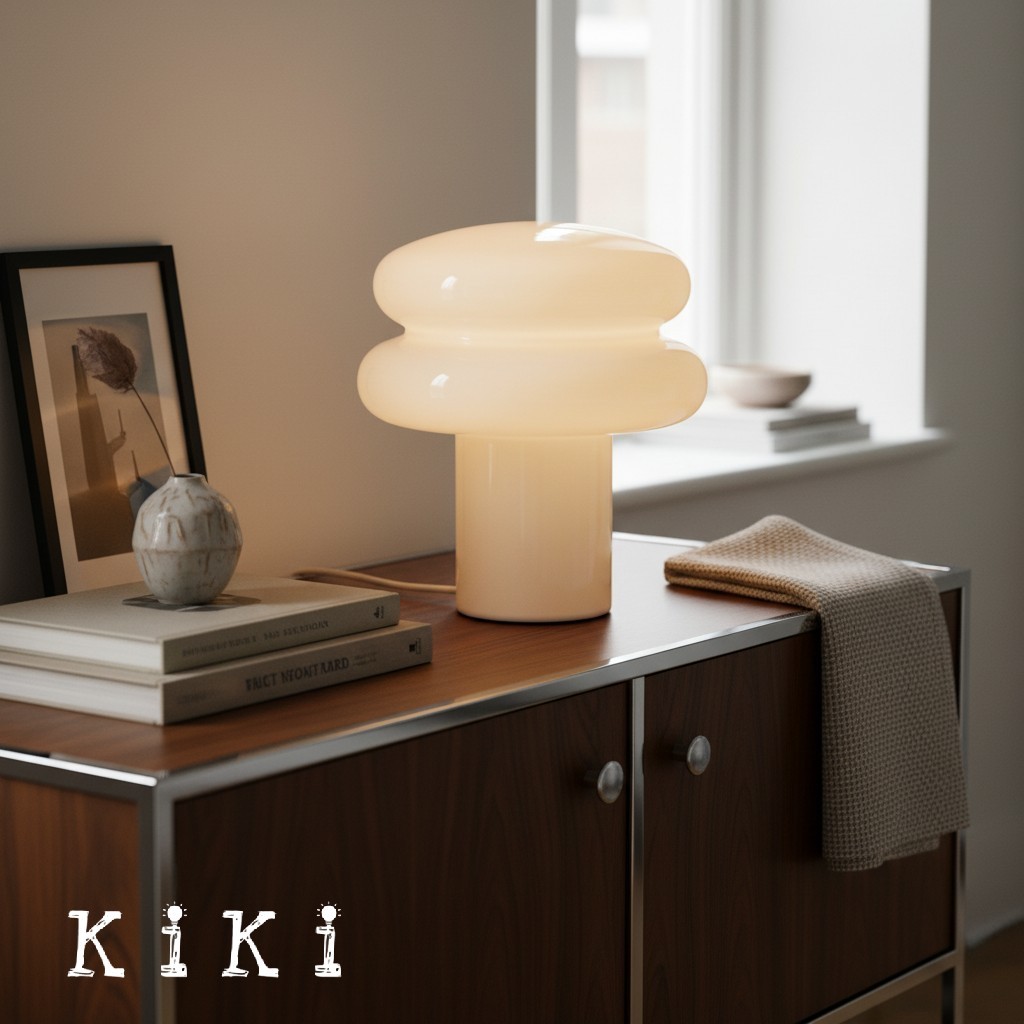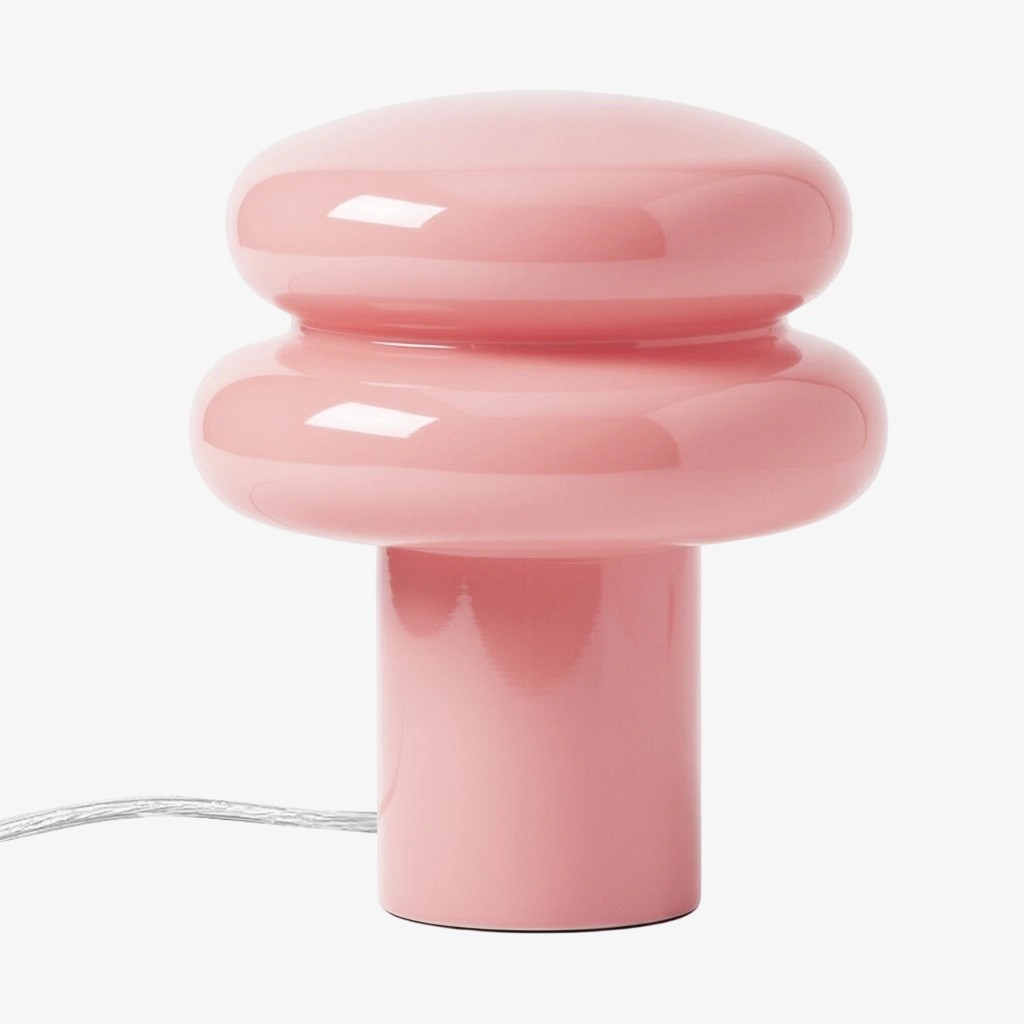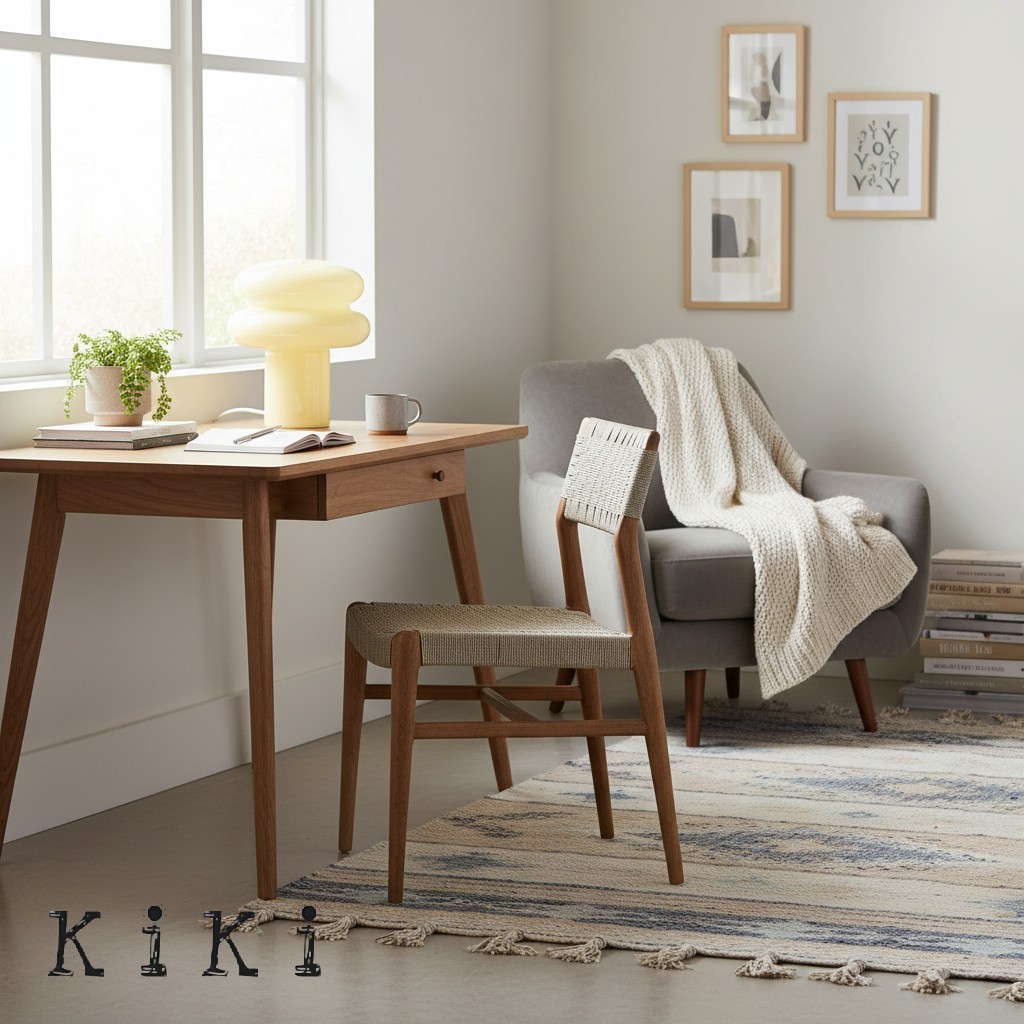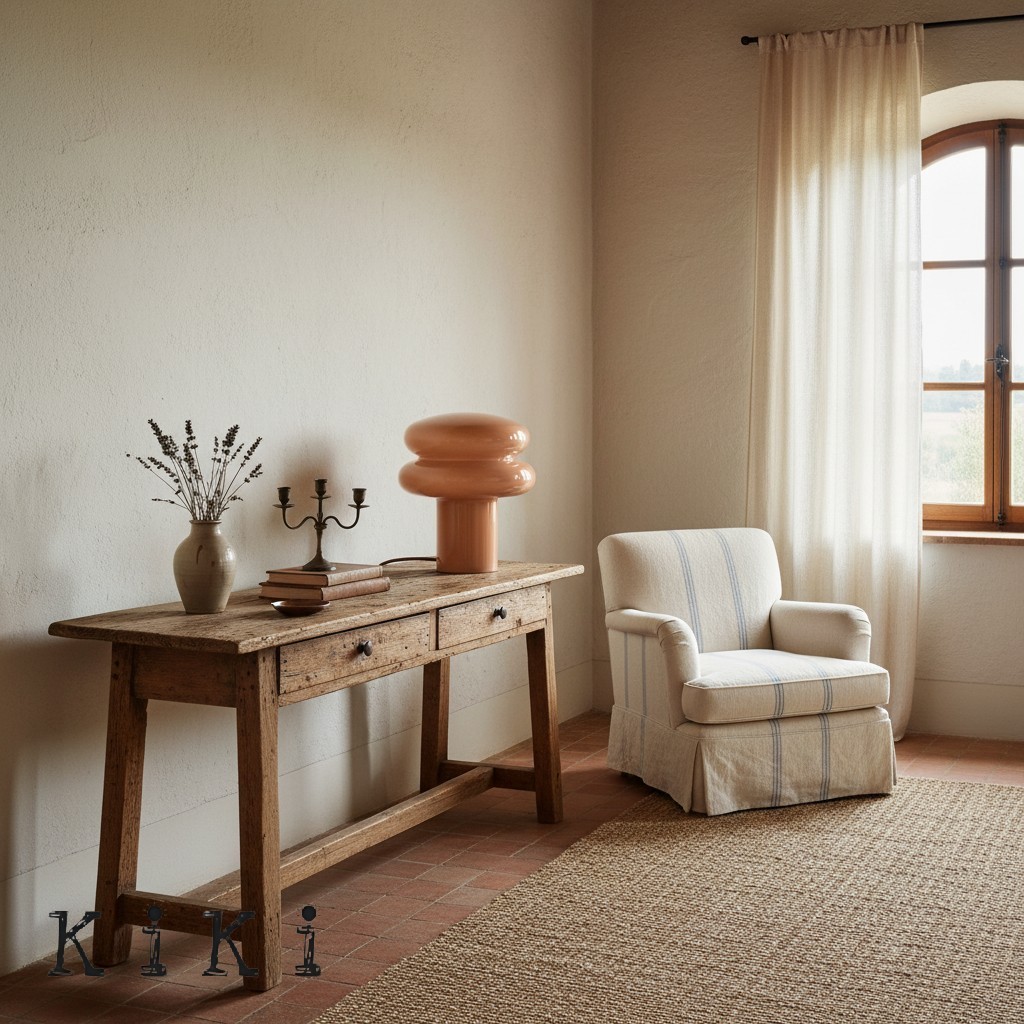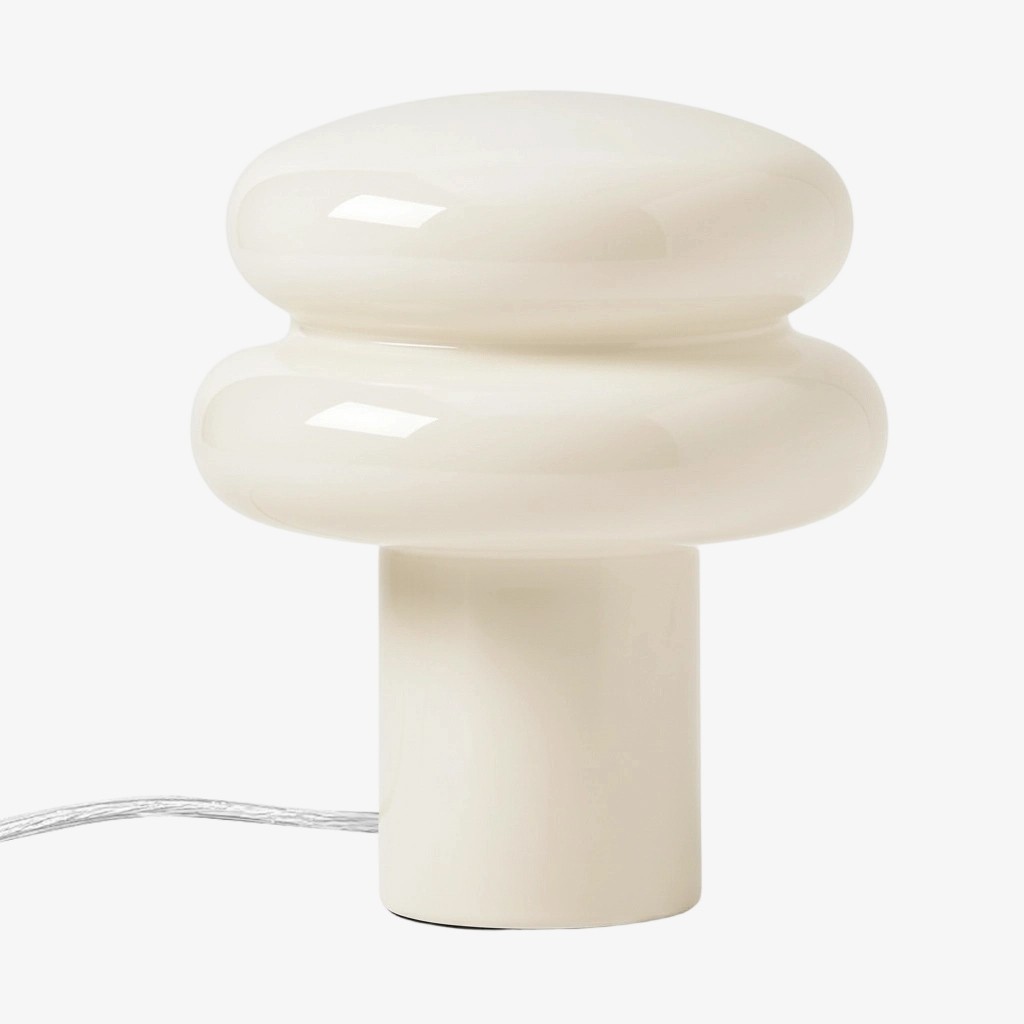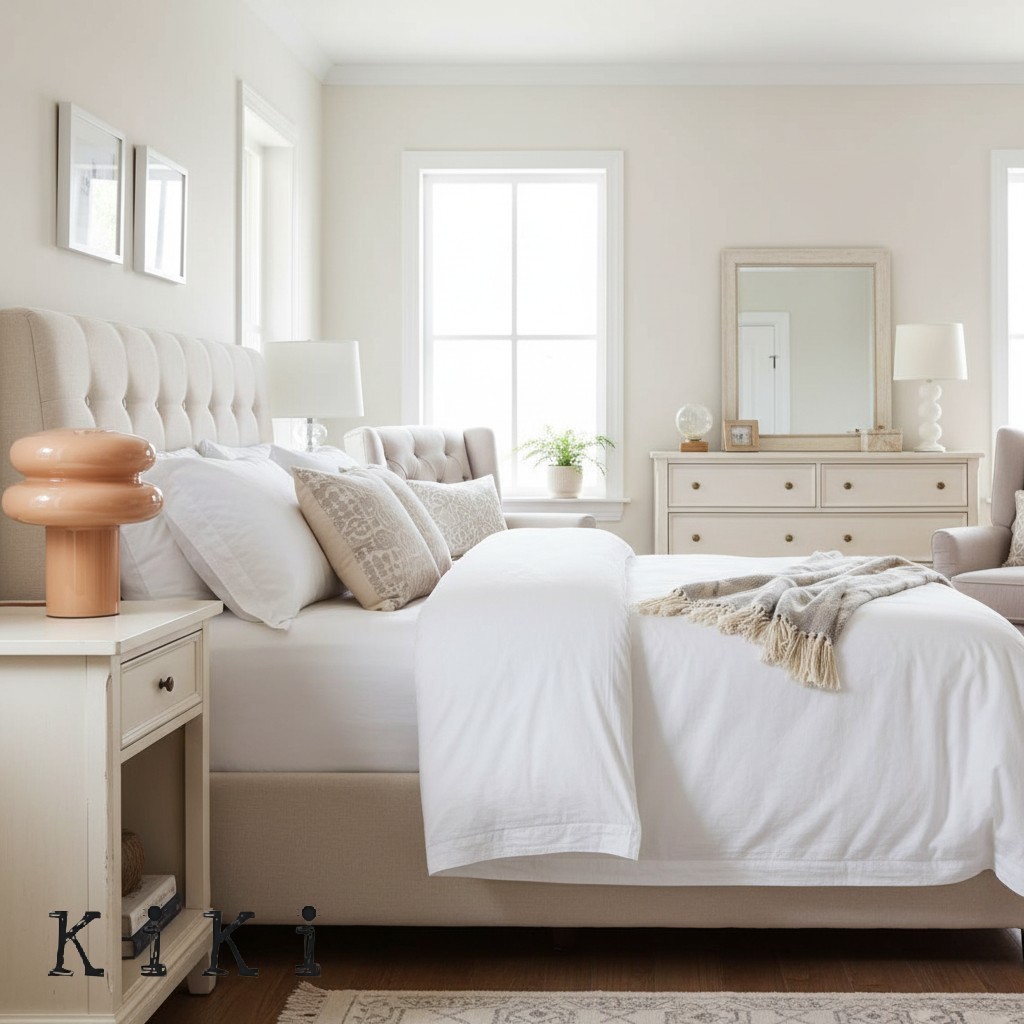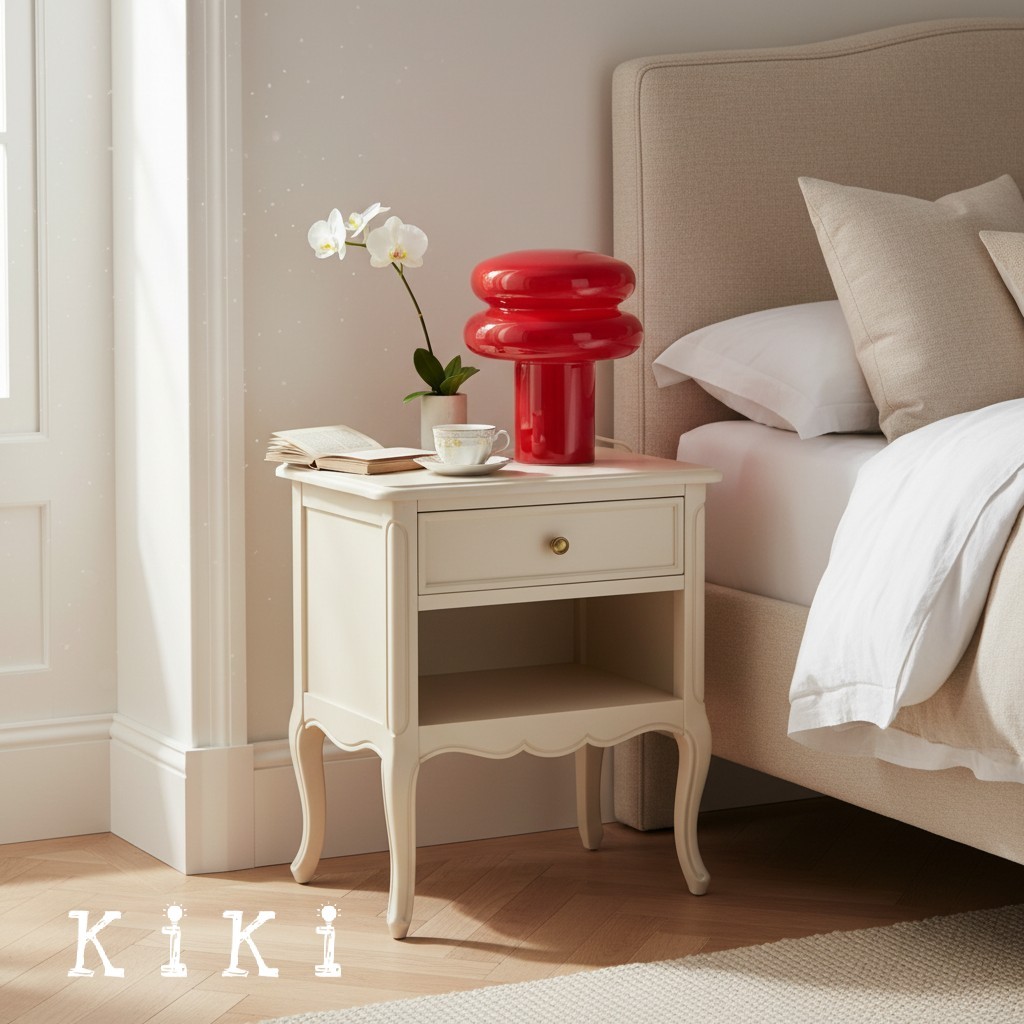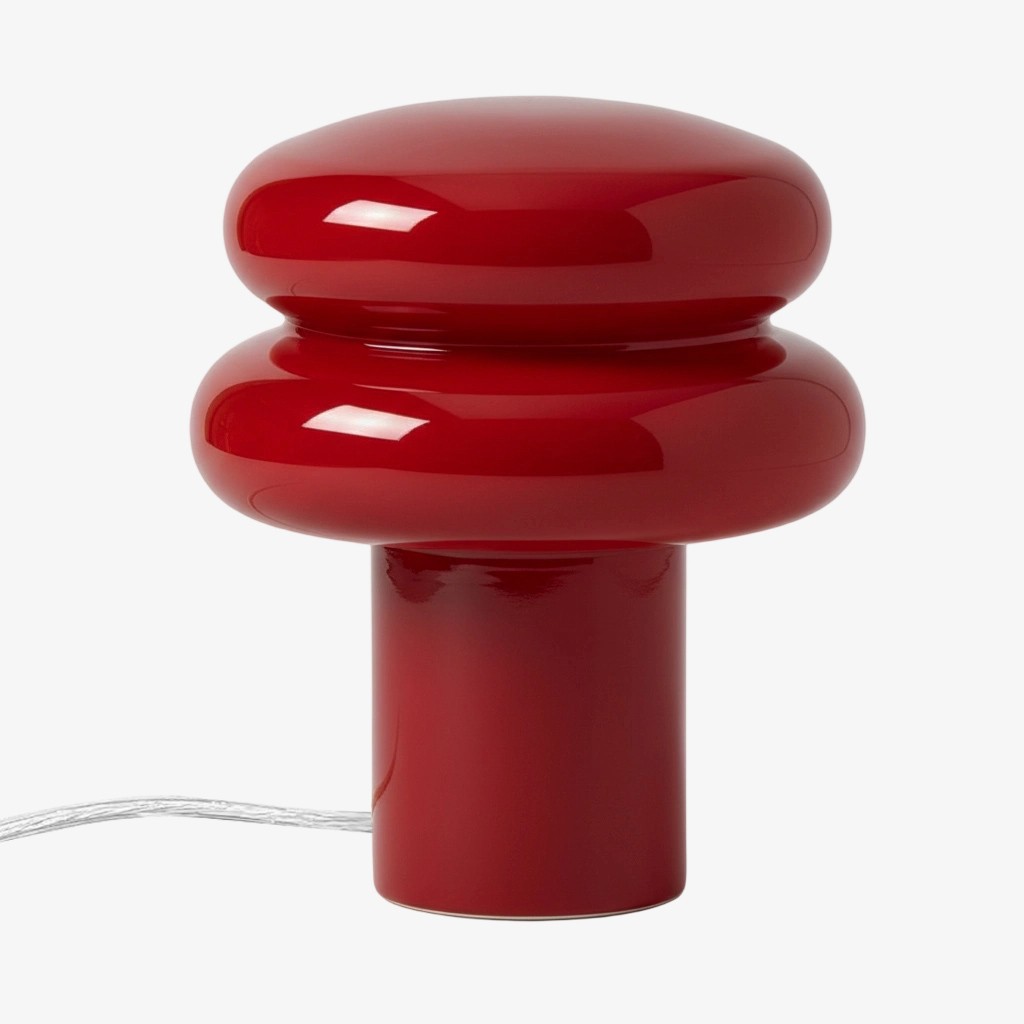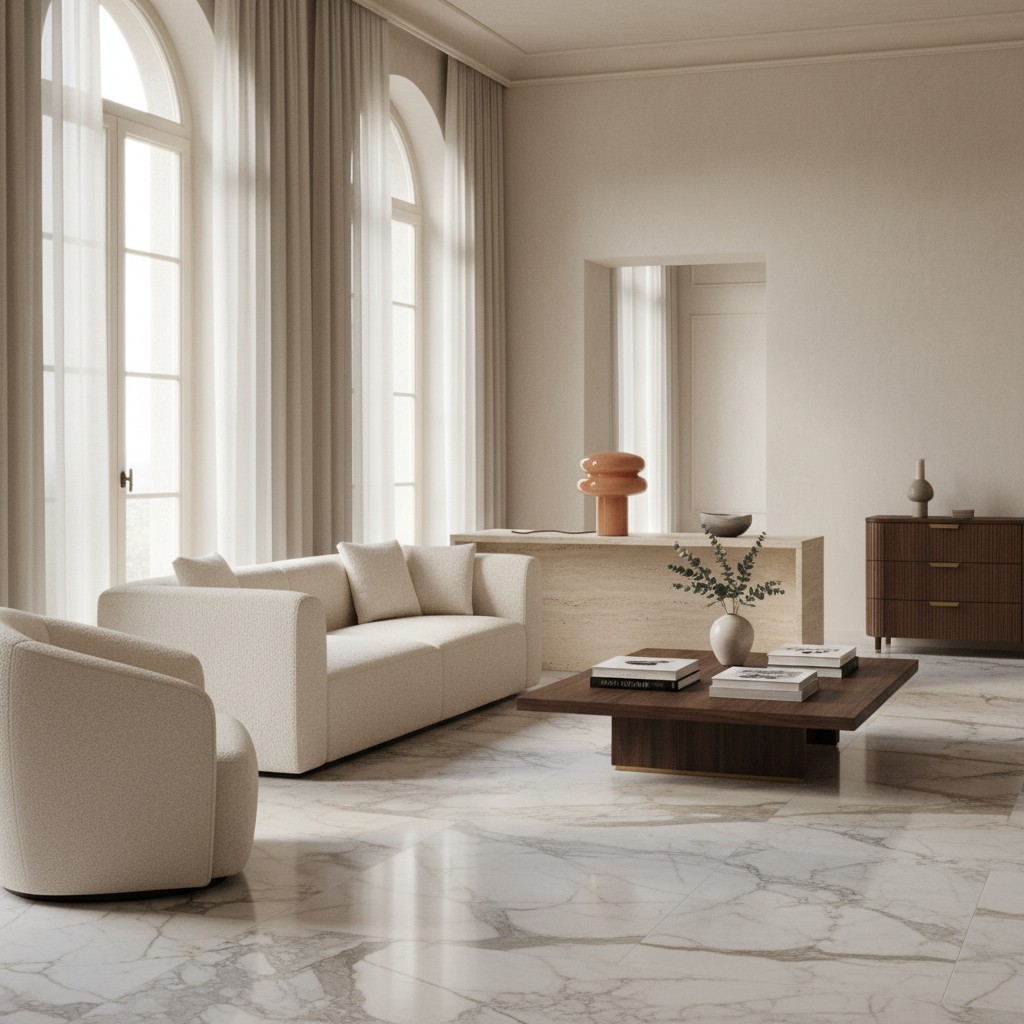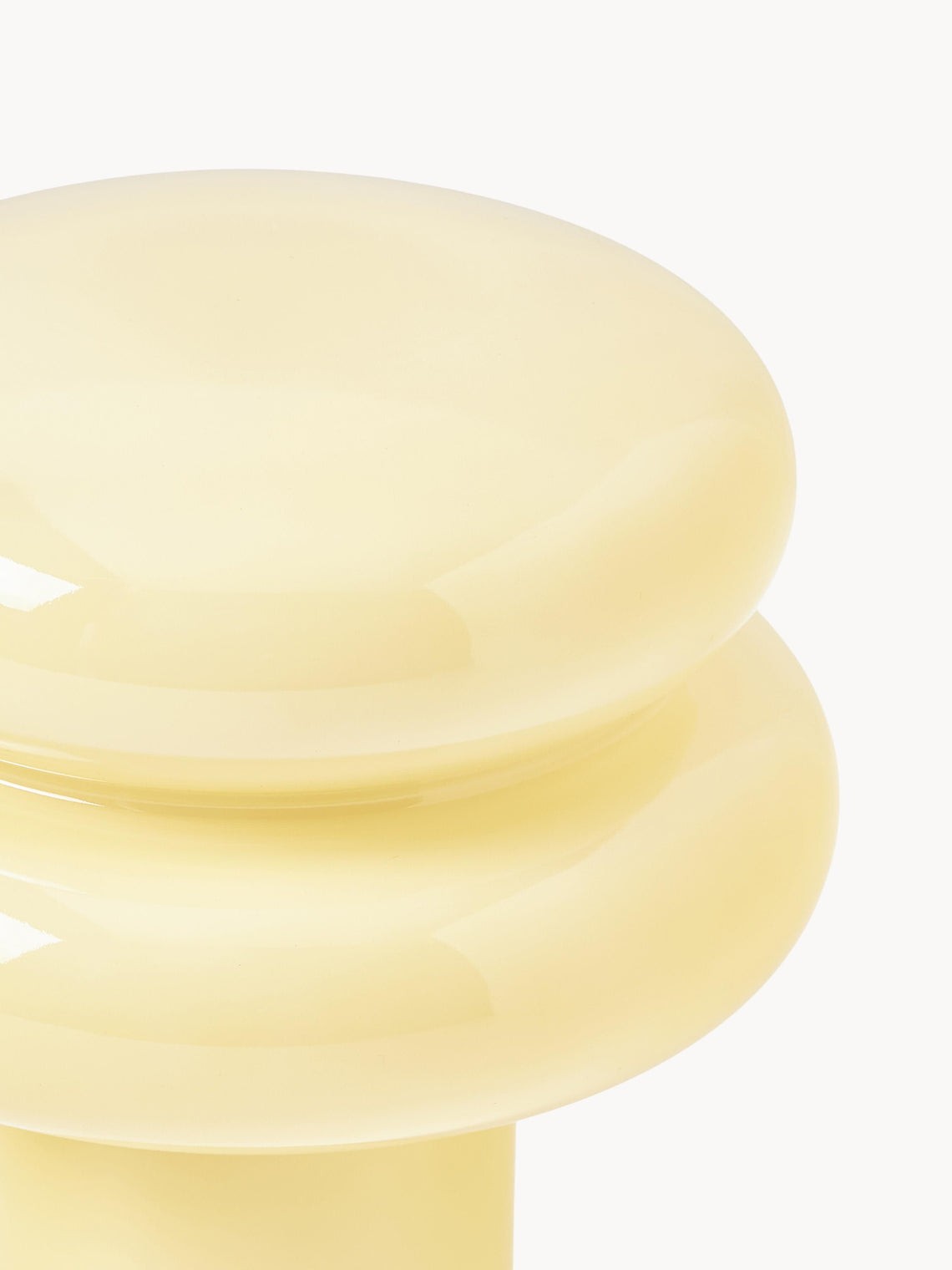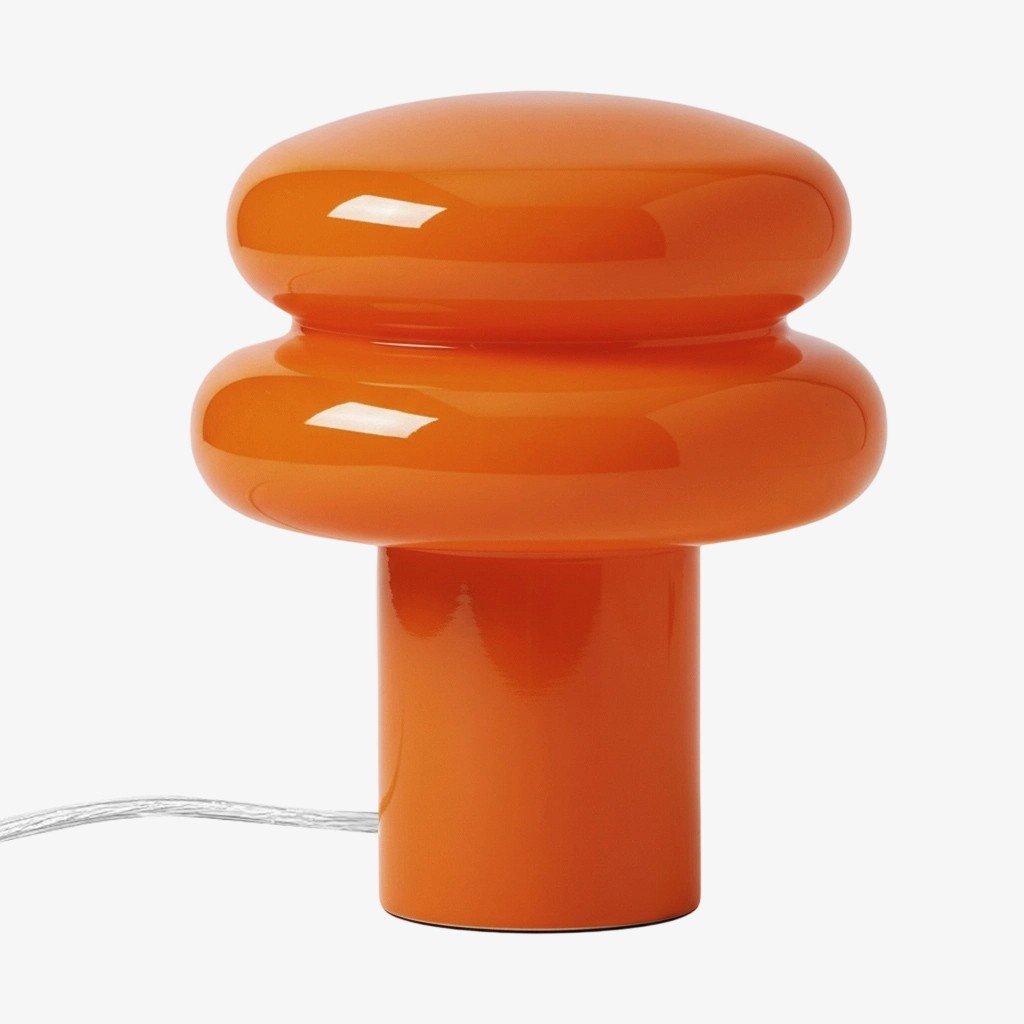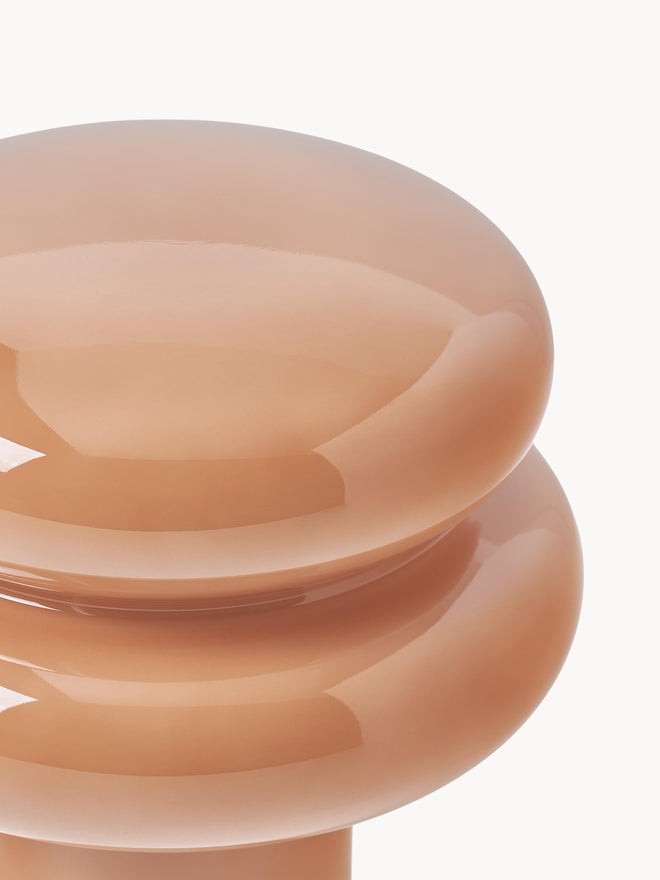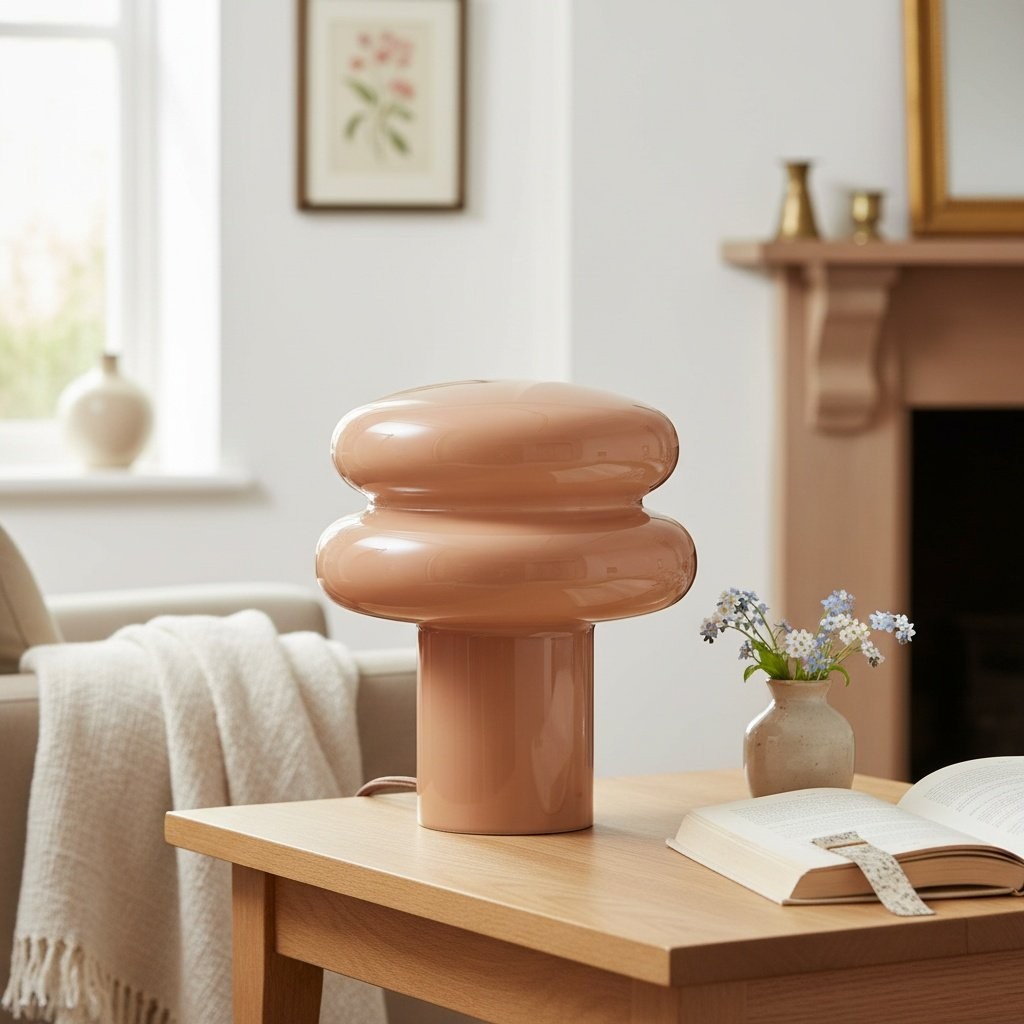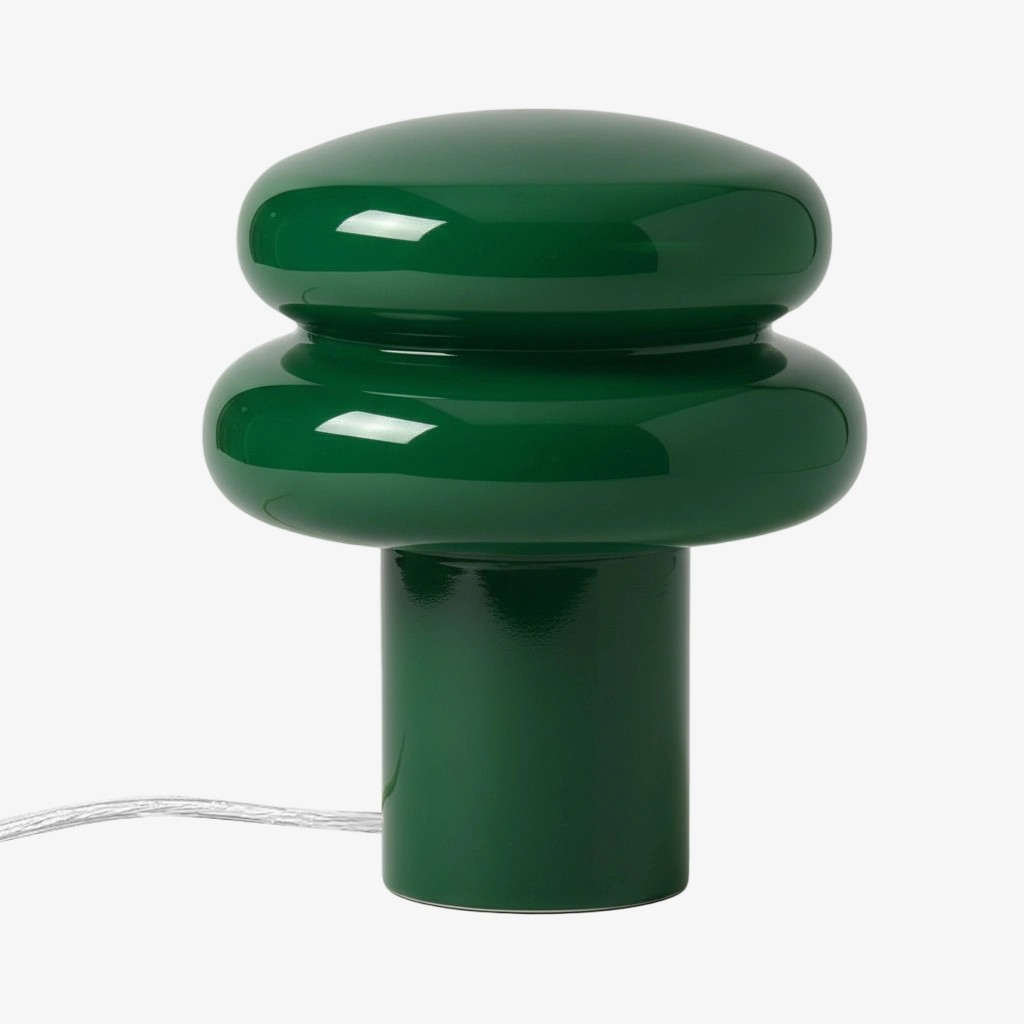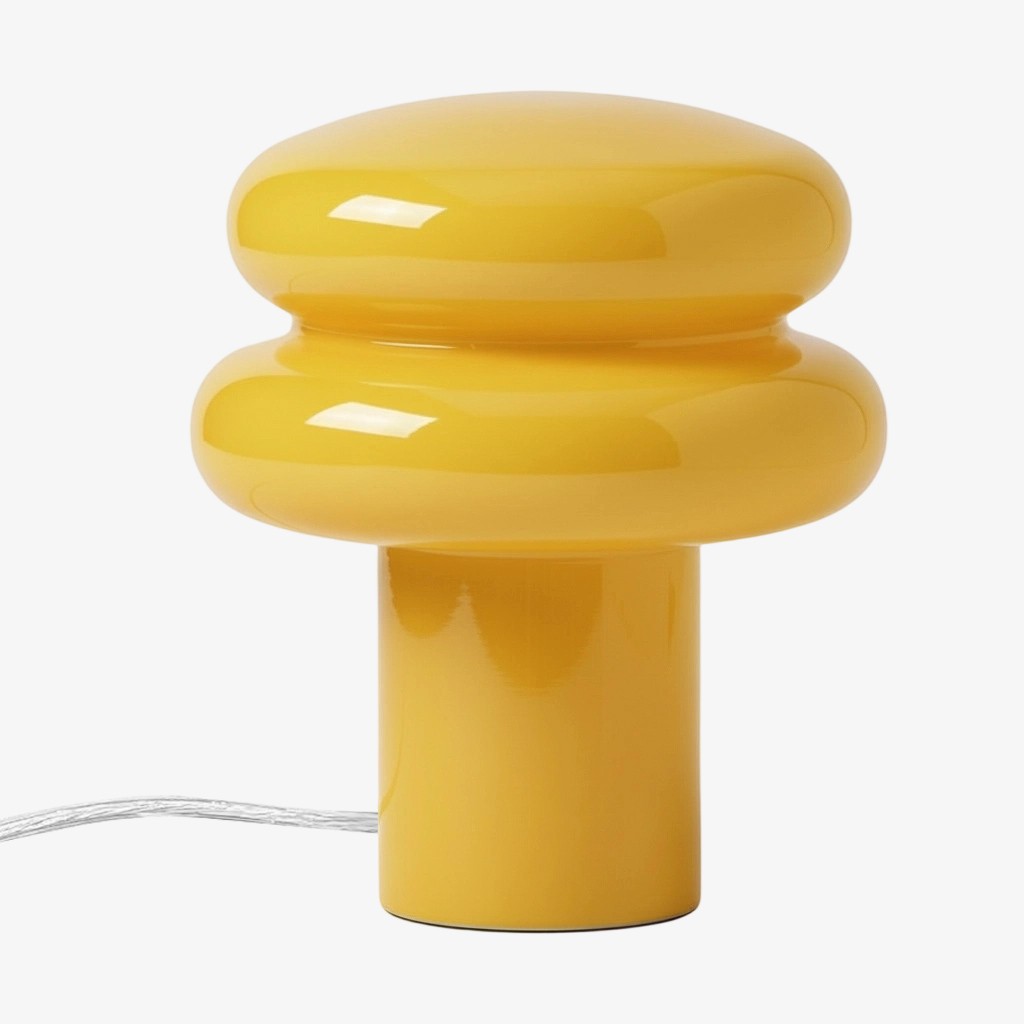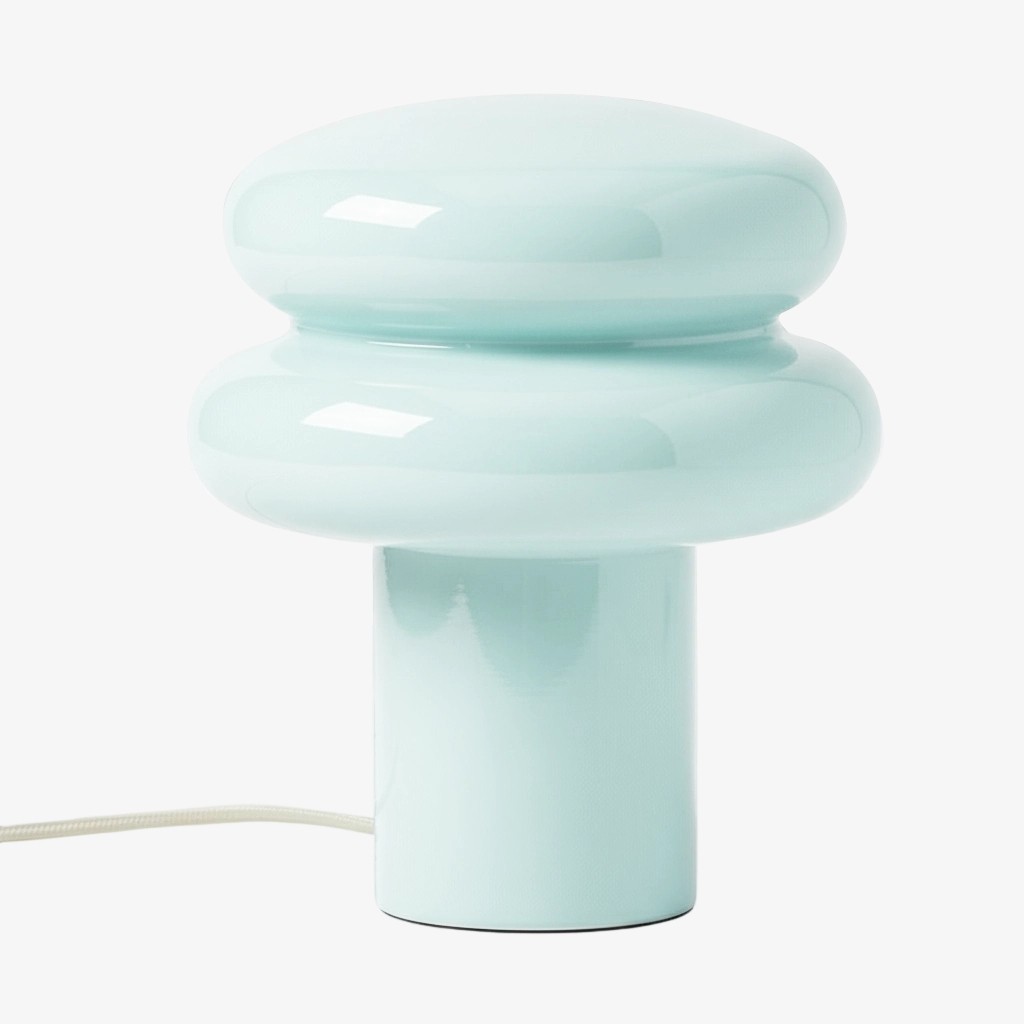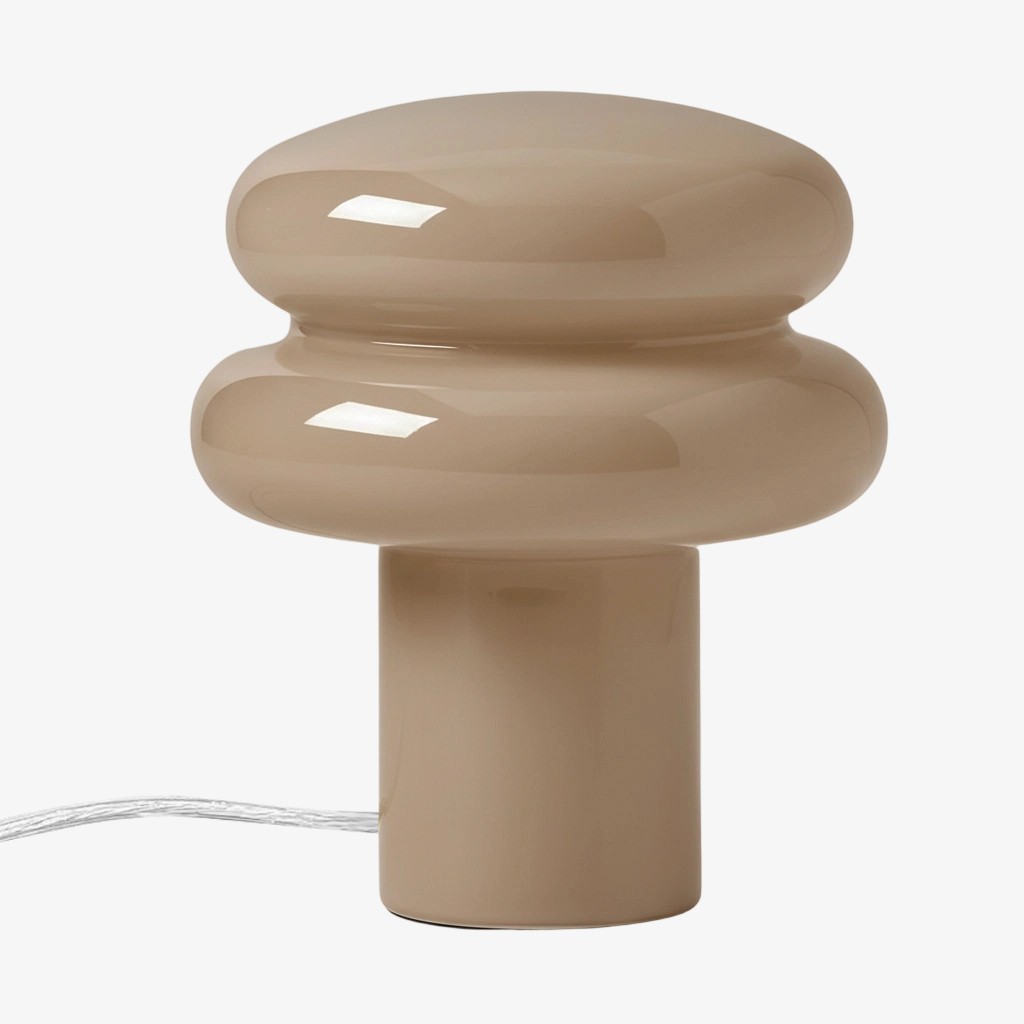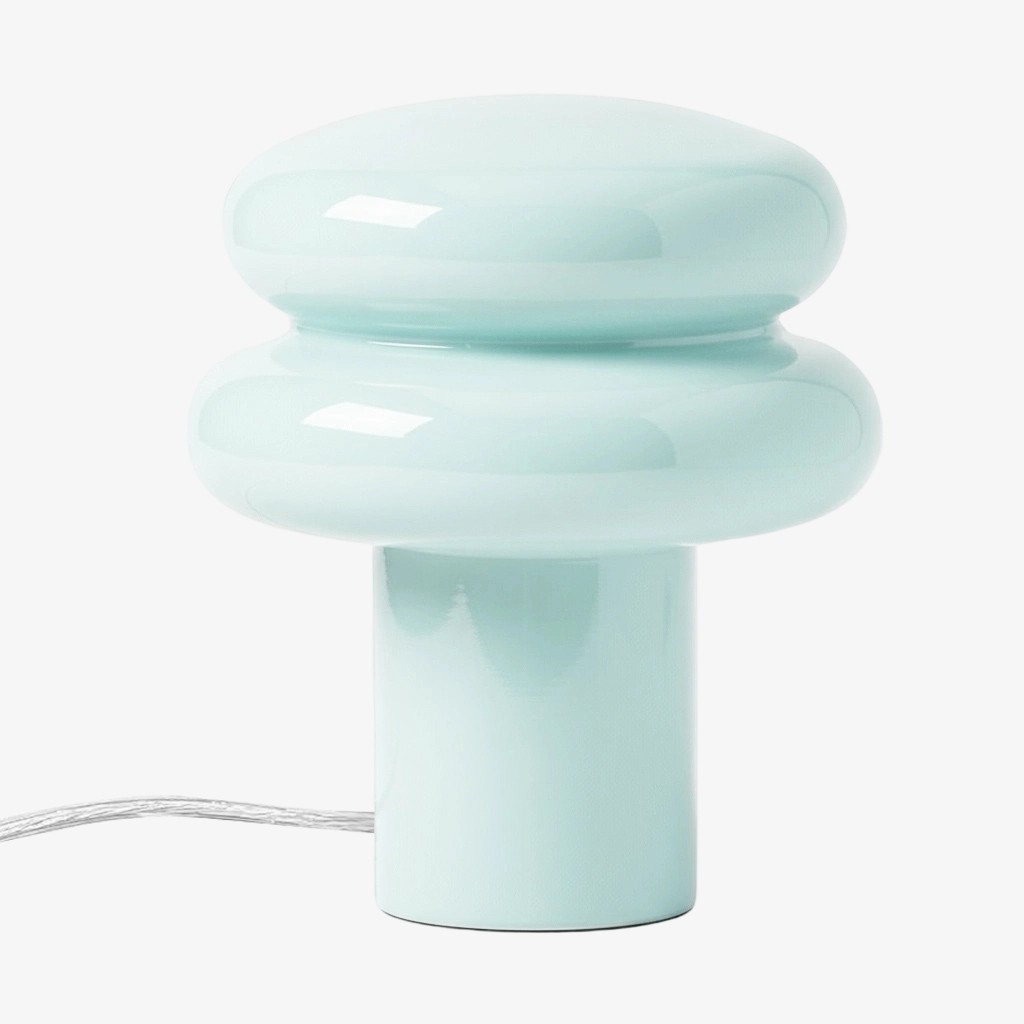
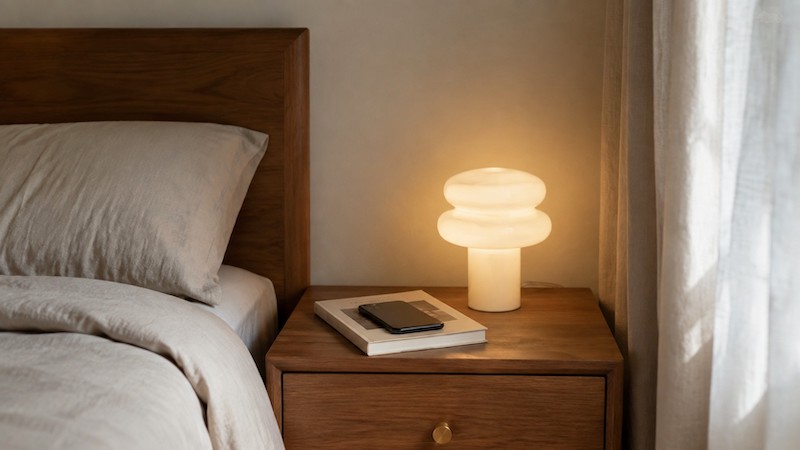
A 24-inch nightstand is wide enough for many table lamps, but width alone does not tell you whether a lamp will feel comfortable or leave usable space. The better method is to compare the lamp's base footprint with the table's usable depth, reserve room for nightly essentials, and then check the light from the bed. A lamp that fits physically can still be too low for reading or too visually heavy for a compact room.
For reference, 24 inches equals 60.96 cm. The Orra Mushroom Glass Table Lamp has a diameter of 9 cm, or 3.5 inches, so it occupies only about 14.8% of the nightstand's width. That makes it an unusually space-saving option. The calculation is useful, but it is only the first of five checks.
Take Four Measurements Before Shopping
Measure the full width of the nightstand, its usable depth, the height from the floor to the top, and the distance from the tabletop to the top of the mattress. Also note where the outlet sits. These measurements reveal whether the base can sit fully supported, whether the switch will be easy to reach, and whether the shade will land at a useful height.
- Width controls the front-facing visual relationship between lamp and table.
- Depth controls stability and the remaining zone for a phone, book, or water.
- Nightstand and mattress heights control how high the light sits beside your body.
- Outlet position controls the cable route and may rule out the preferred corner.
Write the numbers down rather than shopping from memory. Product photographs often use larger furniture than the nightstand in your home, which can make a lamp appear smaller than it is.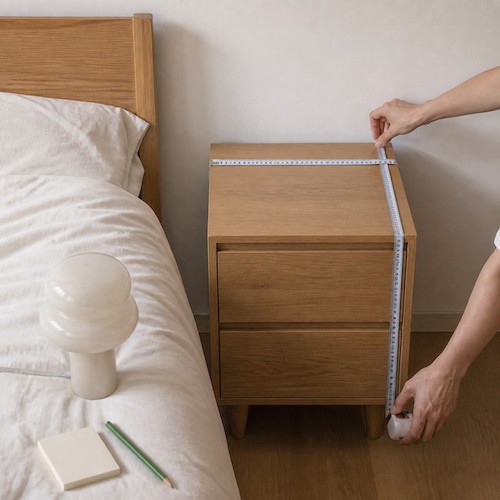
Step 1: Protect the Usable Surface
Decide what must remain on the table every night. For many people that means a phone, glasses, water, and a book. Place those items first, then measure the clear area at the back or outer corner. This reverses the usual process: instead of forcing your routine around a lamp, you choose a lamp that fits the routine.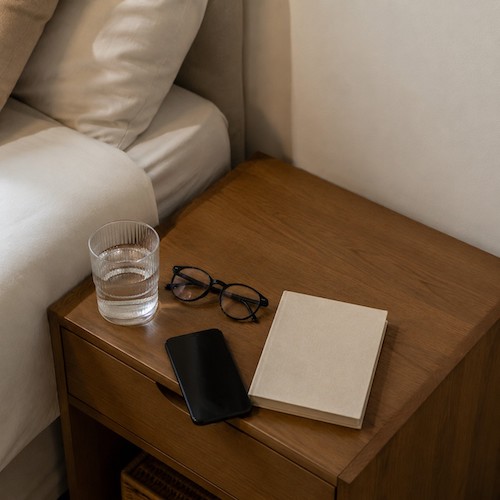
Do not plan with every object pushed against an edge. Leave a small buffer so a sleepy hand does not knock the lamp while reaching for water. The entire lamp base should rest on one level surface. A narrow base helps, but stability still depends on the furniture being flat and firm.
Step 2: Judge the Base, Not Just the Shade
Lamp listings often draw attention to the widest part of a shade, yet the base is the critical measurement for placement. Compare base width with both table width and depth. A small base on a wide but shallow table can still work, while a deep decorative base may crowd a table that looks generous from the front.
Here is the Orra example: 3.5 inches divided by 24 inches equals approximately 0.146, or 14.6%; using the exact metric dimensions, 9 cm divided by 60.96 cm equals about 14.8%. The small difference comes from rounded product conversions. Either way, the lamp uses less than one-sixth of the table width. This is a fit calculation, not a universal design rule.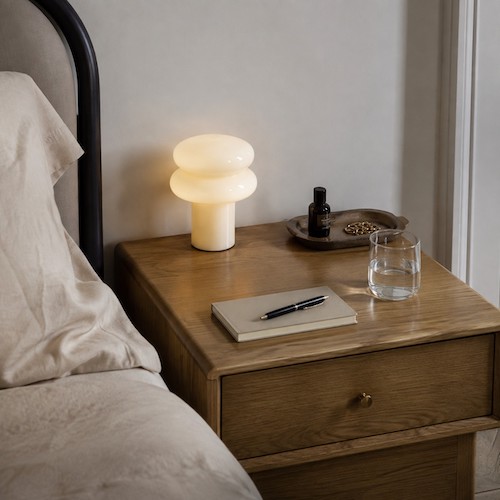
| Check | What to compare | Why it matters |
|---|---|---|
| Base footprint | Lamp base vs usable depth | Confirms stable support |
| Width share | Lamp diameter vs 24 in tabletop | Shows how much horizontal space remains |
| Daily items | Clear zone after placement | Protects real bedside use |
| Cable route | Lamp to outlet | Avoids crossing drawers or bedding |
Step 3: Separate Physical Fit From Useful Height
A 20 cm-high lamp can fit beautifully on a 24-inch nightstand and still be the wrong reading light. Physical fit asks whether the lamp is stable and leaves space. Useful height asks where the illuminated shade sits relative to the mattress, your shoulders, and your eyes when you are in bed.
Use the lamp's likely position to perform a seated test. If the light source would be far below the page or if the lamp would sit behind a tall stack of pillows, choose a taller or adjustable reading light. If the goal is soft evening atmosphere and quick nighttime navigation, a low lamp can be exactly right. Article B1-2 provides the full test for whether a 20 cm bedside lamp is too small.
Do not assume that a queen or king bed automatically demands a larger lamp. Bed size affects the room's visual scale, but bedside function happens locally between the sleeper, the nightstand, and the light.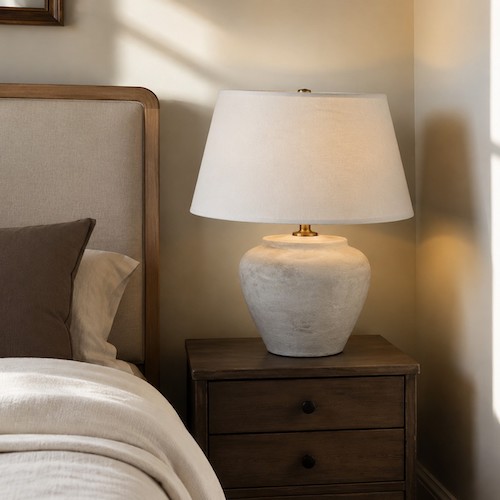
Step 4: Test the Back-Corner Position
The back corner usually protects the lamp from elbows and preserves the center of the table. Place a paper circle matching the base there, route a spare cord toward the outlet, and open every drawer. Make sure the cord does not catch, the base does not overlap a raised edge, and curtains or bedding do not press against the fixture.
- Keep the lamp far enough from the table edge that the base cannot be clipped by a reaching hand.
- Keep the switch on the user-facing side when the design allows it.
- Avoid placing a glass lamp where a door, curtain, or swinging wall-mounted object can strike it.
Step 5: Balance Visual Weight
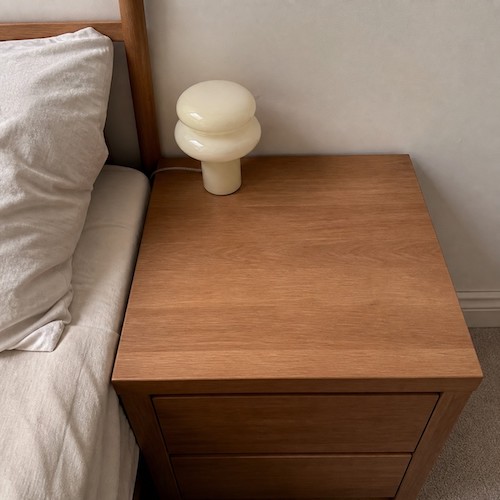
Visual weight is not the same as physical size. A dark, opaque lamp can appear heavier than a pale opal-glass lamp with the same dimensions. A compact mushroom form reads as a deliberate accent when its color is repeated in bedding, artwork, or a small accessory. It can look accidental when it is surrounded by oversized objects with no visual relationship.
On a 24-inch nightstand, a small glass lamp works especially well with a low headboard, a compact bed, or a room that already has another reading source. If the wall above is empty and the lamp looks lost, solve the larger composition with art or a wall-mounted element instead of automatically choosing an oversized base that consumes the table.
For two nightstands, repeat the same lamp or a related color only if both sides need light. The one-or-two-bedside-lamps comparison in article B1-3 helps separate functional pairing from decorative symmetry.
A 24-Inch Nightstand Checklist
- Convert the tabletop width: 24 in equals 60.96 cm.
- Measure usable depth after accounting for a wall lip or raised edge.
- Reserve the items you use before allocating the lamp footprint.
- Compare the base with the clear corner, not just the table's full width.
- Check seated eye position separately from physical fit.
- Test drawers, switch access, cable route, and stability.
Frequently Asked Questions
Is a 9 cm-wide lamp too narrow for a 24-inch nightstand?
Not physically. It uses about 14.8% of the table width, so the more important questions are stability, visual balance, and intended lighting task.
Should lamp size be based on nightstand width or depth?
Use both. Width affects appearance, while usable depth often determines whether the base sits safely and leaves practical space.
How far should a lamp sit from the edge of the nightstand?
There is no single required distance. Keep the whole base supported and leave enough buffer that normal reaching cannot clip it.
Does a larger bed always need a larger bedside lamp?
No. Bed size affects visual scale, but useful bedside lighting depends more on the sleeper, nightstand, and task.
Can two small lamps look better than one large lamp?
Yes, when both sides have nightstands and real use. In a very small room, one compact lamp may look calmer and work better.