
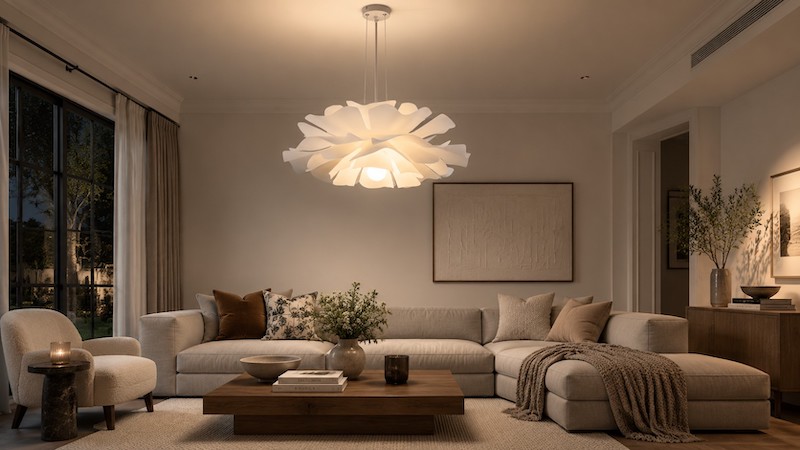
A large living area with poor natural light often feels more like a cavern than a comfortable home, but the most effective solution is not blasting the room with a single ultra-bright, glaring bulb. Instead, you must build a layered lighting scheme anchored by a visually striking, soft-glowing centerpiece. By utilizing a large, gently diffusing pendant light as your primary ambient source and pairing it with strategically placed secondary lights, you can instantly transform a gloomy space into an inviting, well-proportioned, and beautifully illuminated room.
Quick Answer: How to Light a Dark, Large Living Room
To effectively illuminate a large room that lacks natural sunlight, you must abandon the idea that one ceiling fixture can do all the work. Here is the core strategy you need to adopt:
- Embrace Layered Lighting: Combine a central ambient light with peripheral task and accent lights to eliminate dark corners.
- Prioritize Diffusion Over Raw Power: Choose fixtures with frosted or acrylic shades rather than clear glass. Clear glass with high-wattage bulbs creates harsh shadows and eye-straining glare in dark rooms.
- Scale Up the Visual Anchor: A large room needs a large fixture. Undersized lights look entirely lost in expansive, dark ceilings.
- Utilize Daytime Aesthetics: Because your room is naturally dark, the fixture must act as a piece of sculptural decor during the day to bring character and visual interest to the space, even when turned off.
Key Criteria for Choosing the Right Centerpiece
When evaluating lighting options for a dim, oversized living area, your decision should be driven by specific criteria. You are not just buying a light bulb; you are purchasing a functional piece of architecture that defines the room's mood.
1. Material and Light Quality
In a space craving light, the material of your lampshade dictates everything. Heavy fabrics absorb light, while clear glass exposes the bulb, creating harsh contrasts. Acrylic is the optimal middle ground. An acrylic lamp body provides excellent light transmittance while fully diffusing the light source. This means you get a soft, even glow that washes across the ceiling and upper walls without piercing your eyes when you look up.
2. Proportion and Sizing
A common mistake in large living rooms is installing a pendant light that is far too small. A fixture meant to anchor a room needs physical presence. You must select a light that offers multiple size variations to perfectly match your floor plan. A fixture spanning 70 cm to 80 cm in diameter is highly recommended for the center of a spacious living room, as it visually fills the ceiling void and balances bulky furniture below.
3. Color as a Light Substitute
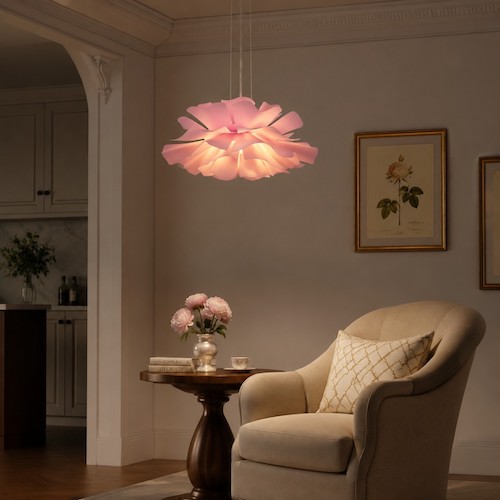
When a room lacks windows or faces north, it inherently feels cold and sterile. The color of your light fixture can compensate for this. While white is a classic choice for maximizing reflection, introducing subtle tones like pink can inject warmth into gray shadows, while a soft green can mimic the vibrancy of the outdoors that the room is physically lacking. Read our full breakdown on how to choose the modern floral pendant light for your home color scheme.
4. Weight and Structural Safety
Large fixtures often come with a heavy burden—literally. Expansive glass or crystal chandeliers require reinforced ceiling joists and complicated installations. Selecting a large fixture made from lightweight materials (around 3 kg / 6.6 lbs) allows for massive visual impact without the engineering nightmares, making it suitable for standard drywall ceilings and renter-friendly upgrades.
Specific Solutions: Scaling and Layering Your Lighting
Designing a lighting scheme requires practical application. Here is how you can use a large, floral-inspired pendant light to solve specific lighting problems in your dark living space.
Step 1: Choose the Exact Size for Your Zone
Sizing your central fixture correctly is the foundation of good interior design. If you are using a flower-shaped pendant, the diameter dictates its role in the room. Use this reference table to match the fixture size to your specific area:
| Fixture Diameter | Best Suited For | Recommended Application |
|---|---|---|
| Dia 40 cm × H 25 cm | Breakfast nooks, reading corners | Hang slightly lower to create a cozy, intimate glow in a specific dark corner of the living room. |
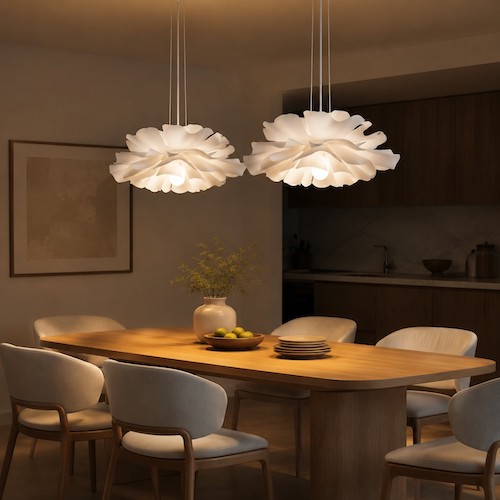
| Dia 50 cm × H 25 cm | Small dining tables, entryways | Perfect for secondary zones within an open-plan living space to separate the dining area from the lounge. |
| Dia 60 cm × H 28 cm | Medium living rooms, bedrooms | A standard central anchor that provides substantial light without overwhelming standard ceiling heights. |
| Dia 70 cm × H 26 cm | Large living areas, high ceilings | Acts as a strong focal point. Visually grounds large seating arrangements like oversized sectionals. |
| Dia 80 cm × H 30 cm | Expansive open-plan lofts | The ultimate statement piece. Fills massive empty air space and draws the eye upward, making the room feel grander. |
Step 2: Build Layers Around a Fixed Ambient Source
A crucial factor to consider is the control method. Many high-design acrylic pendants operate via a standard push-button switch and are not dimmable. They feature a standard E27 dual-bulb setup (Max 40W total). This means your central pendant will provide a consistent, baseline level of ambient light.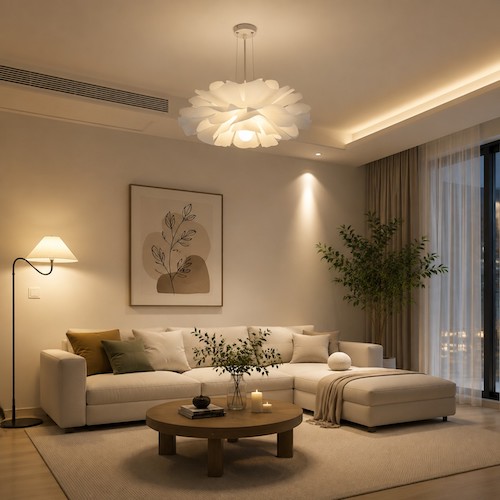
To create a dynamic room, you must layer around this fixed source ,learn more about planning a three-tier living area lighting layout around a flower pendant light:
- The Base Layer (The Pendant): Turn this on to establish the room's overarching mood. The acrylic petals will push a soft, non-directional wash of light throughout the upper half of the room.
- The Mid Layer (Wall Lighting): To prevent the "cave effect" where the ceiling is bright but the walls are dark, install wall sconces that cast light downward or wash the walls. This expands the perceived width of the room.
- The Lower Layer (Task Lighting): Because the central pendant is capped at 40W to maintain a soft glow, you cannot rely on it for reading or intricate tasks. Introduce floor lamps next to your armchairs or sofas. When you want to watch a movie, you can turn off the main pendant and rely solely on a dim floor lamp to change the room's atmosphere completely.
Step 3: Capitalize on the "Off" State
A room with poor natural light suffers during the daytime as well. A standard flush-mount dome light looks like a dead piece of plastic when turned off. A meticulously designed, floral-shaped pendant, however, acts as a hanging sculpture. The overlapping acrylic petals catch whatever ambient daylight manages to filter into the room, creating subtle shadows and organic textures. Choosing a pink or green variant turns the fixture into a permanent piece of colorful ceiling art, actively fighting the daytime gloom.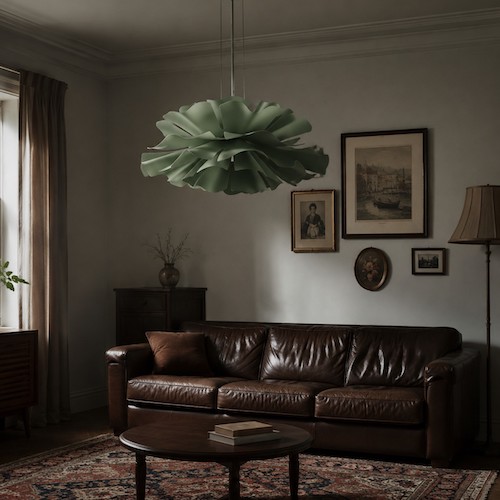
Common Mistakes to Avoid in Low-Light Rooms
Even with the right intentions, homeowners frequently make lighting errors that exacerbate the very problems they are trying to fix. Avoid these critical pitfalls:
- The Over-Lamping Trap: Attempting to force a single fixture to light a massive room by installing bulbs that exceed the recommended wattage. If a fixture is rated for Max 40W, exceeding this will not only damage the acrylic housing through heat buildup but will also turn a beautiful ambient glow into a glaring eyesore.
- Choosing Cool White Bulbs (6000K+): Dark rooms inherently feel cold. Putting a stark, blue-toned "daylight" bulb into a white acrylic pendant will make your living room feel like a hospital cafeteria. Always opt for warm white (2700K - 3000K) to replicate the cozy, inviting feel of golden hour sunlight. (Learn more in our color temperature guide).
- Incorrect Hanging Height: In a dark living room, you want the light to spread as far as possible. Hanging a pendant too low restricts the light pool and creates visual obstructions. For a central living room walkway, the bottom of the fixture should be at least 2.1 m (approx. 7 feet) from the floor. If placed directly over a coffee table, you can afford to drop it slightly lower to anchor the seating area.
Our Recommendation: The Elegant Flower Pendant Light
If you are looking for a fixture that perfectly executes all the design principles mentioned above, we highly recommend the Elegant Flower pendant light.
This fixture is purposefully engineered for spaces that demand both substantial scale and delicate light diffusion. Available in five precise diameters ranging from a modest 40 cm to a commanding 80 cm, it allows you to scale the fixture perfectly to your room's exact dimensions.
Crafted with a high-quality, lightweight acrylic lamp body, it weighs a highly manageable 3 kg (6.6 lbs), ensuring an easy, safe installation process without the need for heavy-duty ceiling hardware. The overlapping petal design is not merely decorative; it serves to beautifully refract and soften the light from its E27 dual-bulb core. Available in crisp White, subtle Pink, and refreshing Green, the Elegant Flower pendant light stands as a stunning piece of modern sculpture during the day, and a flawless source of ambient layering at night.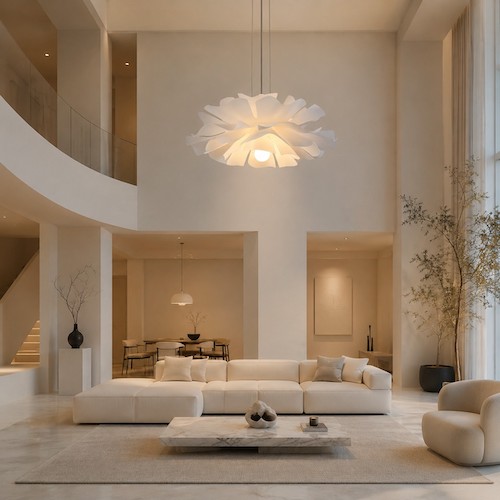
Frequently Asked Questions (FAQ)
Are E27 bulbs difficult to find for this type of fixture?
No. The E27 (Edison screw 27 mm) is one of the most universal and widely available bulb bases globally. You can easily find LED replacements in any hardware store or supermarket, allowing you to easily customize the color temperature of your room.
Will an acrylic lampshade turn yellow over time?
High-quality modern acrylic is treated to resist UV degradation. Since the primary cause of yellowing is prolonged exposure to direct, harsh sunlight, utilizing this fixture in a living area with poor natural light actually works to the material's advantage, ensuring it retains its pristine color for years.
Since the light is not dimmable, how do I create different moods?
A non-dimmable central fixture should be treated as your foundational layer of light. To alter the room's mood, you simply change the surrounding layers. Turn off the main pendant and switch on your perimeter table lamps or floor lamps to instantly transition from a bright, active environment to a relaxed, cinematic atmosphere.
Will the 80 cm size feel too oppressive and low in my living room?
No, provided you account for the fixture's height. While the 80 cm version is wide, its height is only 30 cm. This relatively shallow profile allows it to spread wide across the ceiling without dropping aggressively down into your vertical living space, maintaining an open and airy feel in the room.


